
Jamini Roy: The Timeless Voice of Indian Folk Art
Long before modern art took over galleries, Jamini Roy looked back—drawing from village walls and folk tales. His brush spoke boldly in the language of Indian tradition.
INDIAN FOLK ART
Pramod Sharma
4/12/20252 min read
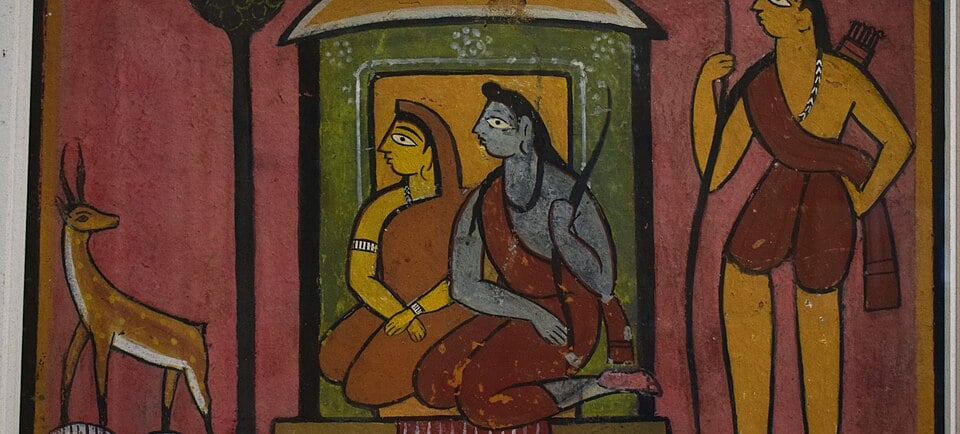

Born on 11 April 1887, in the quiet town of Bankura, West Bengal, Jamini Roy would grow up to become a name synonymous with the revival of Indian folk art. Often referred to as the father of India’s folk renaissance, his journey was not just artistic—it was deeply rooted in pride for the country’s cultural soul.
At just 16, Jamini left home to pursue his love for art. He enrolled at the Government School of Art and Craft in Calcutta (now Kolkata), where he mastered British and European styles and portraiture. But even as he perfected these techniques, something within him yearned for a deeper connection—something more native, more real. That turning point came when he began exploring India’s own traditional and tribal art forms.
Inspired by the Kalighat Pattachitra and local village folk styles, his strokes evolved. The lines became bolder, the figures sharper. His Patuas—folk characters painted with compelling simplicity—began to stand out. Between 1921 and 1924, Jamini experimented with depictions of Santhal tribal dancers, capturing rhythm, movement, and the spirit of the land in a manner that felt both innovative and deeply rooted in tradition.
As his style matured, so did his materials. He moved away from canvas, choosing instead to paint on cloth, mats, and wood, surfaces that reflected the earthy essence of his themes. Even the colours he used were drawn from natural pigments, handmade with care and respect for his subjects. Over time, his work leaned heavily into the Kalighat style and the terracotta aesthetics of the Bishnupur temples, preserving the beauty of a heritage that was slowly being forgotten.
During a recent visit to Kolkata, I was absolutely delighted to see Jamini Roy’s original paintings displayed at Jorasanko Thakur Bari, the ancestral home of Rabindranath Tagore. Seeing his works in such a culturally rich and historically significant space added depth and emotion to the experience, one that will stay with me for years to come.
Jamini Roy’s influence stretches far beyond India’s borders. His paintings have been showcased in museums across the world, including the prestigious Victoria and Albert Museum in London. In recognition of his invaluable contributions, he was honoured with the Padma Bhushan in 1955 and was elected a Fellow of the Lalit Kala Akademi in 1956. Today, his works are considered national treasures and are protected from export.
He passed away on 24 April 1972 in Calcutta, but his legacy continues to inspire generations—proving that true art speaks not just to the eye, but to the soul.
Image Source: Wikimedia Commons
© 2025. Pramod's Art Studio All rights reserved. Registered MSME – Udyam No: UDYAM-TS-20-0133833