
When Spitfires Ruled Indian Skies
Discover the history of the Supermarine Spitfire in India and the Burma Campaign during World War II. Learn about its role with the Indian Air Force and lasting legacy.
INDIAN AIR FORCE
Pramod Sharma
8/30/20254 min read
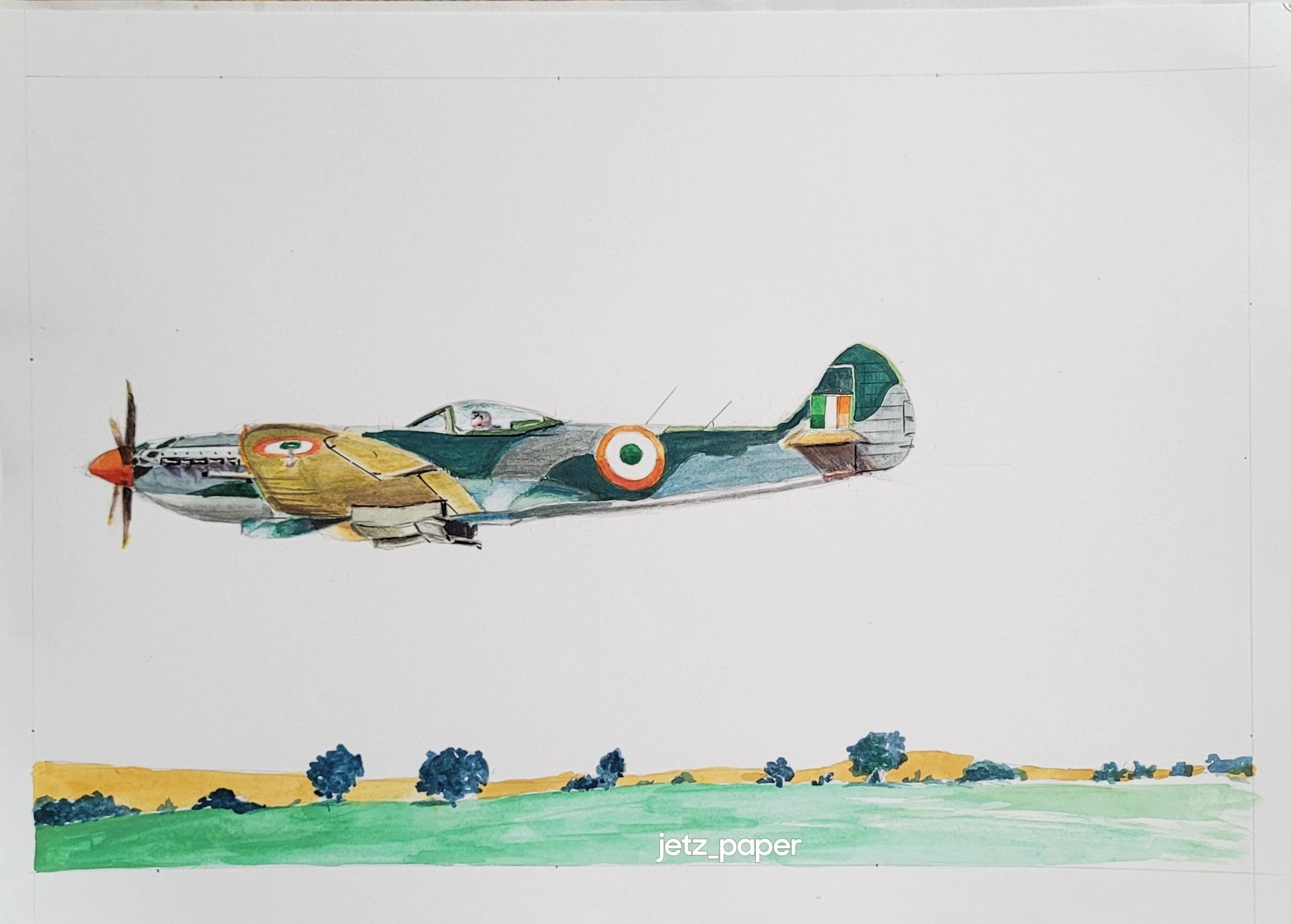
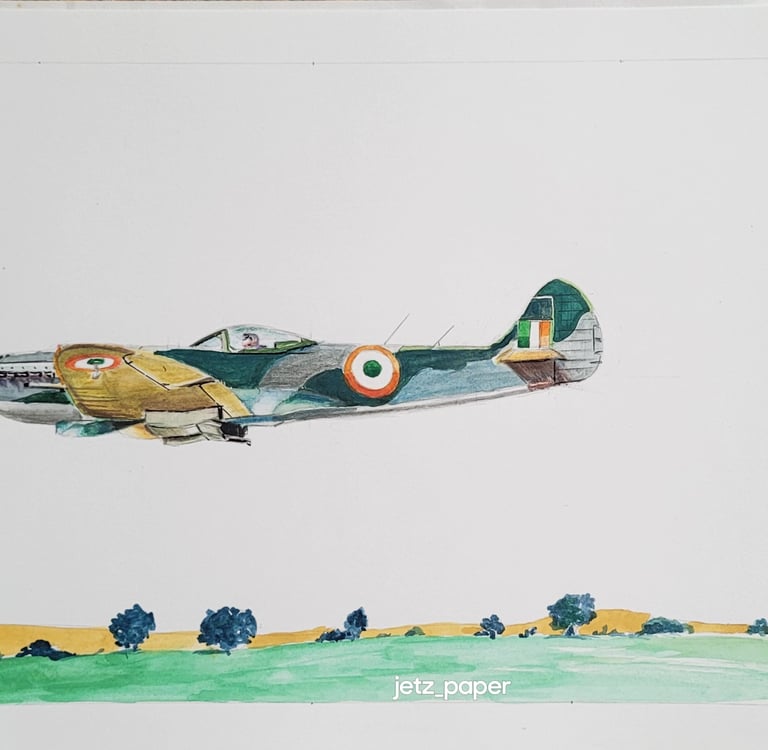
Few fighter aircraft have captured the imagination like the Supermarine Spitfire. Its elliptical wings, the roar of its Merlin engine, and its legendary role in the Battle of Britain made it one of the icons of aviation history. Yet, one chapter remains less told, the story of the Spitfire in India and its service with the Indian Air Force during the Second World War.
As an aviation artist, I often find myself sketching the familiar silhouette of the Spitfire. For me, it is not just a machine of war but a canvas of elegance. Knowing that this aircraft once flew from airstrips in India makes each brushstroke more meaningful.
The Spitfire’s Arrival in India
By the early 1940s, the Japanese advance through Burma threatened India’s eastern frontier. The Allies needed modern fighters to counter agile Japanese aircraft such as the “Oscar” and the “Zero.” Hurricanes had shouldered the defence so far, but they were reaching their limits.
It was at this point that the Supermarine Spitfire arrived in India, shipped in crates and reassembled locally. The first squadrons equipped with Spitfires were soon deployed to the Burma front. Pilots who had once flown in European skies now operated from bases at Chittagong, Imphal, and Palel, facing monsoons, dense jungles, and logistical challenges unique to the subcontinent.
Spitfire Combat Over Burma
From 1943 onwards, the Spitfire was thrown into combat in the Burma Campaign of World War II. Its speed and manoeuvrability proved valuable in dogfights against Japanese aircraft, but the environment was often as great an enemy as the opposition.
Maintenance crews battled humidity and heat, while pilots flew long sorties over unbroken jungle with few landmarks for navigation.
When I imagine those humid mornings at Chittagong or Imphal, I can almost hear the Merlin engine roar into life. It is easy to forget that many of those pilots were barely older than university students today. Visualising their determination is something that guides my art, behind every aircraft silhouette lies a very human story.
The Rangoon Campaign and Operational Challenges
In November 1943, Allied air command in India prepared a campaign to neutralise the Japanese supply hub at Rangoon. The plan relied on day and night bombing raids, with escort fighters protecting the heavy bombers. Long-range American fighters like the P-38 Lightning and P-51 Mustang could reach Rangoon from bases in India. The Spitfire, however, was hampered by limited range, restricting its role.
Instead, Spitfires were tasked with offensive sweeps over Japanese airfields in Burma, though these proved less effective compared to the P-38s or P-51s.
The Spitfire’s second major clash with Japanese aircraft came on 28 November 1943, when enemy bombers struck installations at Feni airfield. A dozen Spitfires from No. 615 Squadron joined Hurricanes in intercepting the attackers. Squadron Leader R.H. Holland claimed one Oscar damaged, while the Hurricanes accounted for another destroyed, though one was lost.
The following day, Japanese bombers escorted by Oscars struck Agartala airfield. Again, Spitfires and Hurricanes scrambled to intercept. In the clash, the Spitfires claimed a Lily bomber as probably destroyed and reported several Oscars damaged, while the Japanese claimed four Allied fighters. In reality, only one bomber was lost.
These encounters revealed both the strengths and limits of the Spitfire in India: formidable in close combat but constrained by endurance and distance.
Spitfires and the Indian Air Force
As the war progressed, the Royal Indian Air Force (RIAF) also received Spitfires. Squadrons such as No. 4, No. 8, and No. 9 flew them with distinction in Burma, marking a major leap forward for Indian pilots. Transitioning from biplanes and early monoplanes to the cutting-edge Spitfire was transformative.
This experience not only aided the Allied war effort but also laid the foundations for the post-independence Indian Air Force. Pilots trained on Spitfires carried their skills and confidence into the future, shaping India’s aviation legacy.
Legacy of the Spitfire in India
After the war, Spitfires continued to serve in India for several years. They were used in patrol duties, training, and in the transitional period after independence. Eventually, jet aircraft replaced them, but the Spitfire left an indelible mark on both the Royal Indian Air Force and the newly independent Indian Air Force.
On my easel, a Spitfire never feels like just rivets and aluminium. It feels alive, a bridge between history and memory. Painting one over the green jungles of Burma or the snowy ridges of Kashmir gives me the same sense of awe that pilots must have felt in the cockpit, looking out over the vast landscapes that shaped their missions.
Today, only a handful of Spitfires in India survive, mostly as museum pieces. But their service here deserves recognition as part of both global aviation history and India’s wartime heritage.
Conclusion
The Supermarine Spitfire in India may not share the fame of its role in the Battle of Britain, but its service in the subcontinent during World War II was equally compelling. It faced new challenges, fought in difficult conditions, and inspired a generation of aviators.
Whenever I visit Delhi, I always make it a point to stop by one of my favourites, the Indian Air Force Museum at Palam. It is truly a haven for aviation enthusiasts and avgeeks, and home to the special Supermarine Spitfire XVIIIe, registered HS986 and Spitfire LF Mk VIIIc (serial NH631). Here, you can explore lesser-known aircraft that once served with the Indian Air Force, preserving their legacy even after they have long gone out of commission.
A Spitfire Mk VIII (serial MV459) was recovered from a riverbed near Ambala, believed to have crash-landed in 1947, and then painstakingly reconstructed as a static exhibit. It's now displayed at the Ambala AFS.
For me, as someone who paints and researches aviation history, the Spitfire represents both art and legacy. It is proof that beauty can exist even in conflict, and that the courage of young pilots flying over India and Burma deserves to be remembered, on canvas, in words, and in history.
Image Source: Painting by Pramod Sharma
© 2025. Pramod's Art Studio All rights reserved. Registered MSME – Udyam No: UDYAM-TS-20-0133833